Temperature Sensors by Range
Start with your process temperature. We help you match the right sensor type to the range for your application.
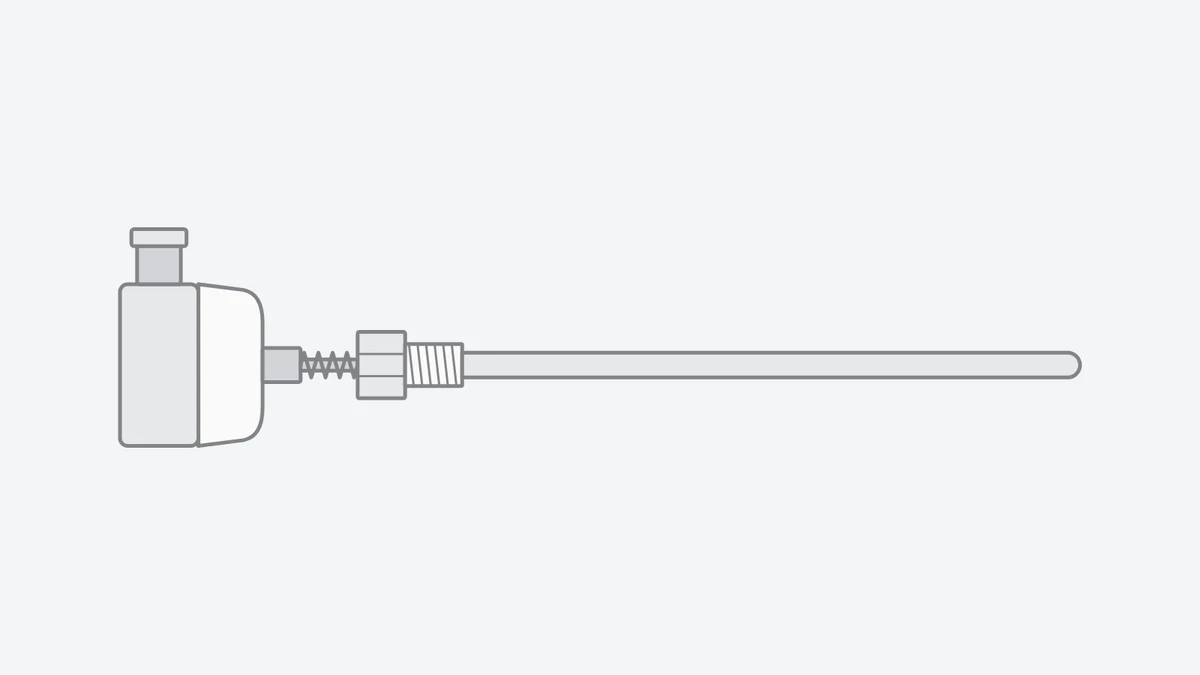
Low Temperature
−200 °C to +200 °C
Cryogenic storage and LNG, Cold rooms and cold chain, Refrigeration systems

High Temperature
+200 °C to +1,200 °C
Industrial ovens and dryers, Boilers and steam lines, Furnaces and heat treatment

Extreme Temperature
above +1,200 °C, up to about +1,800 °C
Kilns and ceramics, Glass production, Steel and metal melting
Approximate sensor ranges
Shaded bands: Low (−200 to +200 °C), High (+200 to +1,200 °C), Extreme (+1,200 to about +1,800 °C). Ranges are typical guidance. The right choice depends on sheath material, insulation, process atmosphere and duty cycle.
Frequently asked questions
Which thermocouple should I use for high temperature?
For most applications up to about 1,260 °C, Type K or Type N thermocouples are common choices, with Type N offering better stability under thermal cycling. Above that, noble-metal Types R, S or B with ceramic protection are typically used.
What is the difference between an RTD and a thermocouple?
An RTD (such as Pt100) measures temperature through the change in resistance of platinum and offers high accuracy and stability, typically up to about 600 °C. A thermocouple generates a small voltage from two dissimilar metals and covers wider and higher ranges, with lower accuracy than an RTD.
What is a thermowell for?
A thermowell is a protective tube installed in the process. It shields the sensor from pressure, flow and corrosive media and allows the sensor to be removed without opening the process. Its design should be checked against flow-induced vibration.
What information should I send for a quote?
Temperature range, process media, pressure, insertion length, process connection, output signal, quantity and any hazardous-area or approval requirement.
Need help choosing?
Tell us your application and we will recommend the right sensor. Email sales@temperature.com.ph or send a request.